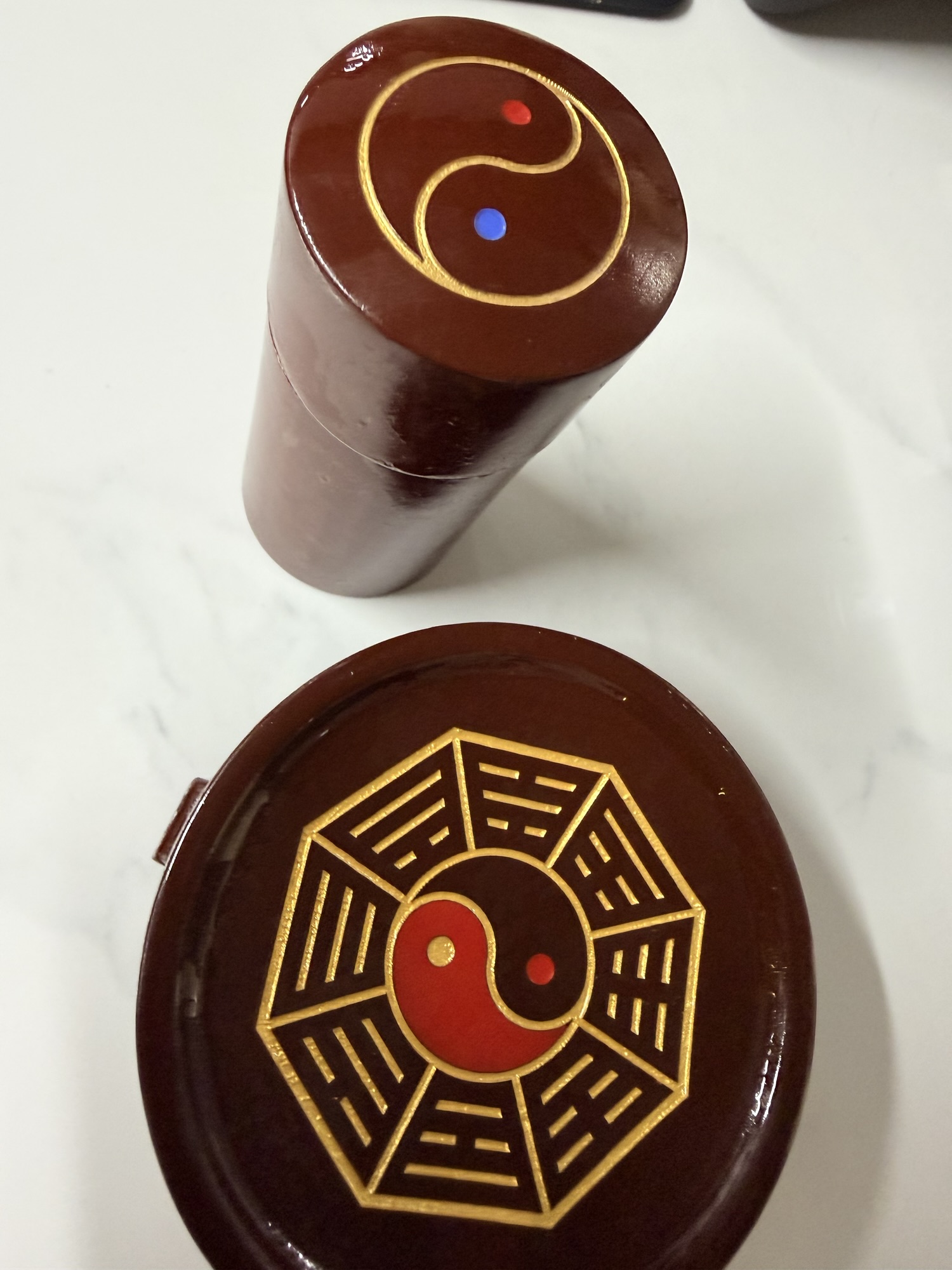
The I Ching Six Lines Divination Method is a traditional Chinese system used to understand events, problems, and possible future outcomes. It comes from the I Ching (Book of Changes), one of the oldest books in the world. The core idea of the method is that everything in life is always changing, and these changes follow natural patterns. By observing these patterns, people can make wiser decisions.

The Six Lines Method begins by creating a hexagram, which is a diagram of six lines stacked on top of each other. Each line can be either yang (a solid line) or yin (a broken line). Yang represents activity, strength, and movement; yin represents rest, softness, and receptivity. The six lines are always read from the bottom upward, because the bottom represents the beginning of a situation and the top represents the final stage.
To form the hexagram, people usually use three coins, although some still use the older yarrow-stalk method. Each toss of the coins creates one line. After six tosses, all lines are complete. Sometimes a line is not only yin or yang, but also a changing yin or changing yang. Changing lines are very important because they show where the situation is unstable or transforming. When a changing line appears, it will flip to its opposite: yin becomes yang, and yang becomes yin. This creates a second hexagram, which represents the future or the direction of change.
Once the hexagram and any changing hexagram are generated, the diviner interprets their meaning. Each of the 64 hexagrams has a name, an image, and a text in the I Ching. The text gives guidance, warnings, and descriptions of situations. The six individual lines also have meanings, especially when they are changing. In the Six Lines Method, the diviner studies not just the hexagram’s basic message, but also how each line interacts with the others, which lines are strong or weak, and which energies are moving.

The Six Lines Divination Method is valued because it gives a dynamic picture of a situation. Instead of saying something is simply “good” or “bad,” the I Ching explains how things are developing, what hidden factors influence the situation, and what actions may lead to better outcomes. It is not fortune-telling in a fixed sense. Instead, it teaches people how to understand change, timing, and balance.
In modern times, the Six Lines Method is used in personal decision-making, feng shui, astrology, business planning, and even psychology. People consult it for relationships, career choices, health concerns, investments, or conflicts. Because its language is symbolic, it allows users to reflect deeply on their problems and see them from a new angle.
Overall, the I Ching Six Lines Method is a system that combines philosophy, observation, and intuition. It helps people see the movement of life more clearly so they can act with wisdom.
Citations / Sources
Wilhelm, R., & Baynes, C. F. (1967). The I Ching or Book of Changes. Princeton University Press. Huang, A. (1998). The Complete I Ching. Inner Traditions. Liu, Da. (1975). I Ching Numerology and Divination. Harper & Row. Karcher, S. (2003). Total I Ching: Myths for Change. Time Warner Books.

